Compare professional teeth whitening vs whitening strips. See what strips can do, what can go wrong, and when Bare Beauty Laser and Aesthetics is the safer choice for you.
You want a brighter smile that looks clean in photos and makes you feel confident when you talk and laugh. You’re not alone.
A YouGov survey found that 19% of Americans have undergone professional whitening specifically. Whitening strips and films are currently the fastest-growing product segment in the teeth whitening market.
So if you’ve found yourself standing in the oral care aisle wondering which option is actually worth it, this guide is for you.
Do Teeth Whitening Strips Work?
Yes, teeth whitening strips work, but with some caveats. They can help with surface stains from coffee, tea, and red wine. And, most people notice a difference within a few days of consistent use.
But with deeper discoloration, whitening strips often fall short. Stains caused by aging, certain medications, or dental trauma sit inside the tooth rather than on the surface. Strips can’t reach those. You’ll likely see some improvement, but it won’t be a dramatic shift.
There’s also a coverage issue because strips are flat, and teeth aren’t. That means the gel doesn’t always reach the edges near your gum line or the tight spaces between teeth. This can leave you with uneven results.
For light staining, strips are a reasonable starting point. For anything more persistent, professional whitening is worth considering.
Professional Teeth Whitening vs Whitening Strips
Whitening strips are thin plastic pieces coated in whitening gel that you press onto your teeth for a set amount of time, usually daily for one to two weeks. They’re designed to lift surface stains from coffee, tea, or soda, and are cheap enough to pick up at any drugstore.
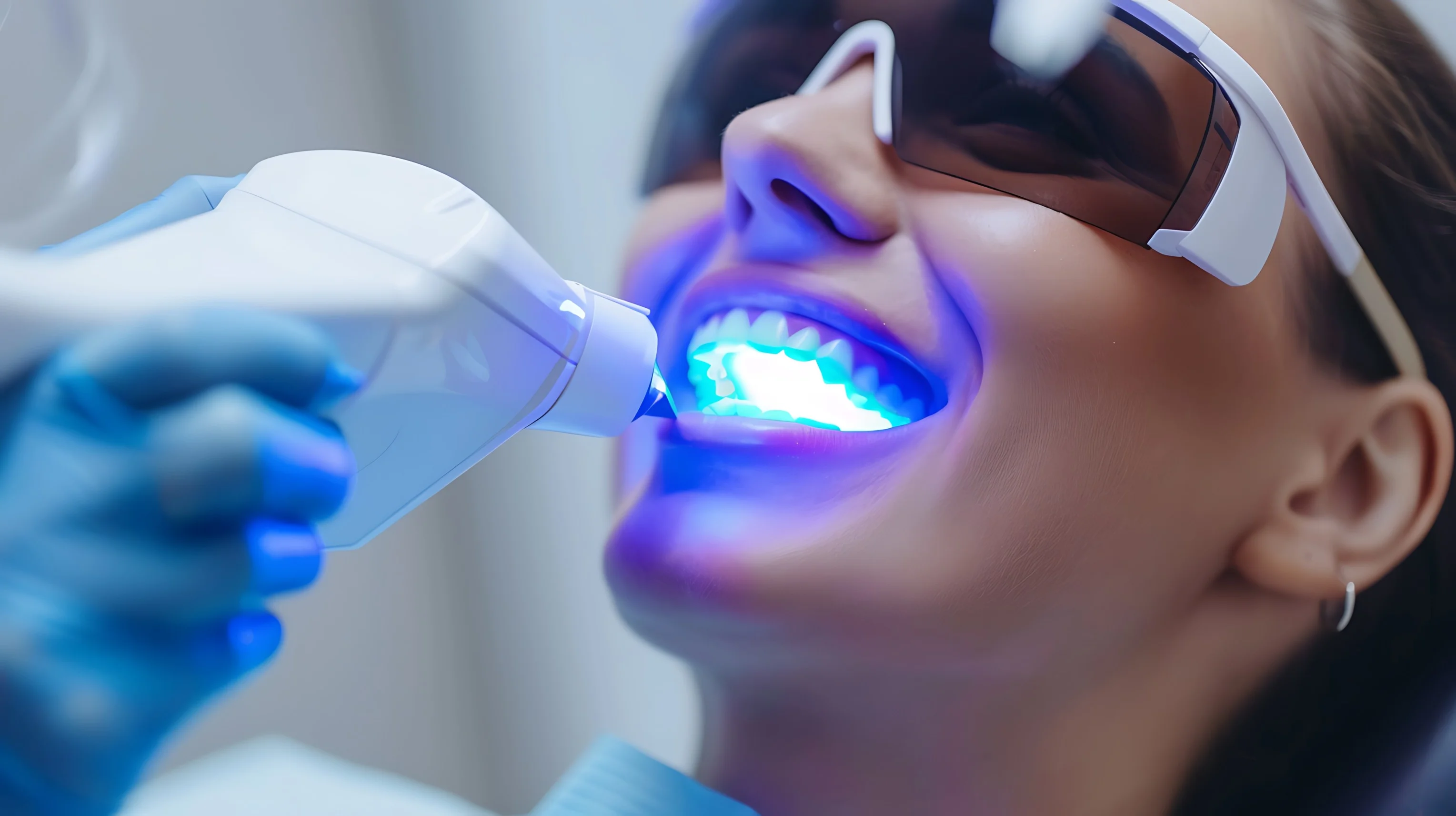
Professional teeth whitening is done by a trainer provider. When you sign up for a professional whitening service, the professional applies a stronger gel, protects your gums, and controls the timing. The process is faster than at-home options and you have someone in the room if anything feels off.
When Strips Are Worth Trying
Teeth whitening strips can be a solid choice if stains are light and on the surface, you’re looking for a lower-cost option, or you don’t have a lot of dental work on your front teeth. They work best when you follow the directions carefully and give your teeth a break if you notice any sensitivity.
One thing to avoid: don’t layer products. Combining strips with whitening toothpaste and mouth rinse at the same time is a quick route to irritation. Pick one approach and stick with it.
When Professional Teeth Whitening Makes More Sense
Want faster results? Dealing with uneven discoloration? Professional whitening is likely the better fit. Especially if you have sensitive teeth and want someone to manage the process for you. It’s also worth going the professional route if you’re not sure what’s causing the staining; a trained provider can assess that before any treatment begins.
Research consistently shows that professionally supervised whitening is safe and effective when done correctly. This is worth knowing if the cost has been putting you off.
Simple Rules For Safe Teeth Whitening At Home
If you choose strips, keep it simple:
- Read the box and follow the time
- Do not use them longer than the plan says
- Stop if your gums burn or peel
- Skip very hot or very cold drinks for a day if you feel pain
- Do not pick at your gums or “scrub” your teeth harder
And if you feel pain that does not fade, talk to a dental professional.
Important Considerations Before You Opt For Teeth Whitening
Before you pick up a box of strips or book a whitening appointment, there are a few things to consider.
Your Brightest Smile Is One Appointment Away
Visit Bare Beauty Laser and Aesthetics Medical Spa in Hayward, WI for expert teeth whitening that actually works.
Existing dental work:
Whitening gel works only on natural tooth enamel. It has no effect on crowns, fillings, or veneers. So if you have dental work on your front teeth, whitening can make your natural teeth lighter while leaving the restorations their original shade, which can look noticeably uneven. A professional can spot this before you start to avoid unwanted surprises.
Tooth sensitivity:
If your teeth are already sensitive to hot or cold, whitening can make that worse, at least temporarily. The gel penetrates the tooth surface, which can aggravate nerves that are already reactive. This doesn’t mean whitening is off the table. It does mean a professional-supervised approach is safer, since the strength and timing can be adjusted to suit your tolerance.
Gum and enamel health:
Whitening on compromised enamel or irritated gums can cause more harm than good. If you have cavities, gum disease, or exposed roots, those should be treated first. Book a dental checkup before whitening.
Professional Teeth Whitening Vs Strips: What Is Right For You?
Strips are a reasonable starting point for light, surface-level staining, They’re affordable, accessible, and easy to use at home. But if you want faster results, more even coverage, or just the reassurance of having a professional, in-office whitening is worth the upgrade.
If you have an event coming up, it’s also worth getting a cleaning first. Removing surface buildup beforehand means the whitening gel works on a cleaner surface, and results look smoother.
At Bare Beauty Laser and Aesthetics, professional whitening comes with a clear plan, a set shade goal, and someone to answer your questions along the way.
Ready to take the next step? Book your whitening appointment at Bare Beauty Laser and Aesthetics.
FAQs on Professional Teeth Whitening vs Strips
Why do some people get white spots on teeth after whitening strips?
Whitening strips can cause white spots in two ways. First, they temporarily dry out the tooth surface, creating uneven patches that usually disappear once your mouth rehydrates. Second, if you already have weak or damaged spots on your teeth, the whitening process can make them more noticeable by brightening everything around them.
The first kind resolves on its own. The second is worth getting checked by a professional.
Why do some people feel pain after whitening?
Whitening gel works by moving through tiny channels in the tooth. That’s how it breaks down stains. But, it can also irritate the nerve along the way, causing a sharp, zingy sensation that catches some people off guard.
Sensitivity is a commonly reported side effect of whitening, particularly with stronger gels or longer use. The good news is that it usually fades on its own. Pushing through it, however, can make things worse. So if your teeth are hurting, that’s a signal to pause.
Are whitening strips bad for your teeth?
Not if you use them as directed. The gel concentration in strips is low enough to be safe for most people. Problems tend to come from overuse. Stick to the instructions, take breaks if you feel sensitivity, and strips are unlikely to cause lasting damage.
The American Dental Association lists some strip products in its ADA Seal guide, which is a good sign that they met safety and quality rules.
Book a Consultation
It’s easy and free!